
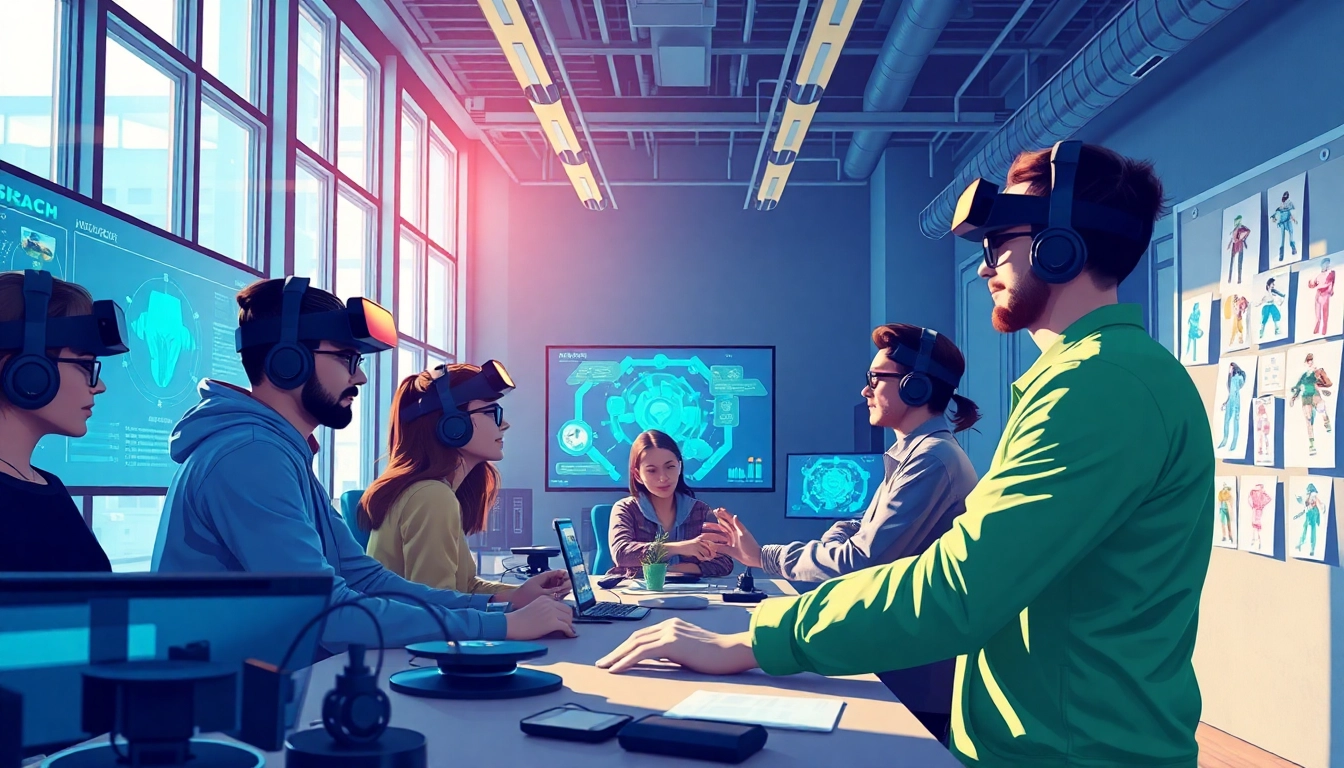
Understanding Game AI: An Introduction
Artificial Intelligence (AI) has revolutionized the gaming industry, transforming the experience from simple interactions to immersive environments that engage players on multiple levels. Game AI refers to the computational systems that manage the behavior of non-player characters (NPCs), adapt gameplay dynamics, and create realistic interactions within a game environment. With advancements in technology, the capabilities of game AI have expanded significantly, leading to more dynamic and responsive gaming experiences. This guide explores the intricacies of game AI, its evolution, implementation strategies, real-world applications, and future trends.
As the gaming industry continues to innovate, understanding the role of game ai becomes essential for developers looking to enhance user experiences and drive engagement. Whether for single-player adventures or complex multiplayer environments, effective game AI is pivotal in creating memorable and challenging gameplay.
Key Concepts in Game AI Development
The development of game AI relies on several fundamental concepts designed to ensure that non-player characters behave in ways that enhance the player’s experience. These concepts are rooted in algorithms and decision-making processes that define how NPCs react to player actions and environmental changes.
Core Algorithms Used in Game AI
Core algorithms form the backbone of game AI systems, enabling them to perform complex computations rapidly. Common algorithms include:
- Finite State Machines (FSM): A model that allows NPCs to switch between defined states based on player actions and environmental stimuli.
- Behavior Trees: A hierarchical model that outlines possible actions and decisions an NPC can take, helping in creating more complex and varied behaviors.
- Pathfinding Algorithms: Techniques like A* and Dijkstra's algorithm that help NPCs navigate the game world efficiently.
Decision-Making Processes for NPCs
Decision-making is critical in game AI, as it dictates how NPCs respond to various situations. This can include basic logic systems that respond directly to player actions or more advanced systems involving learning and adaptation. Incorporating machine learning can allow NPCs to evolve their strategies based on player behavior, creating a more engaging and unpredictable gameplay experience.
Pathfinding and Movement Mechanics
Effective movement mechanics are essential for realistic NPC behavior. Pathfinding algorithms enable characters to navigate their environment, avoid obstacles, and pursue players effectively. Techniques such as navmesh (navigation mesh) allow for more sophisticated movement in complex terrains, adapting to the game’s layout dynamically.
Implementing Game AI: Best Practices
Successfully integrating AI into video games requires careful planning and execution. Here are some best practices to consider:
Designing AI-Driven Characters
Creating compelling AI-driven characters involves a blend of personality, realism, and gameplay function. Developers should design NPCs that reflect their roles within the story, ensuring that they contribute meaningfully to the player's journey.
Balancing AI Difficulty for Players
Another critical aspect is balancing the difficulty of AI opponents. Developers should implement adaptive difficulty systems that adjust the challenge based on player skill and performance, ensuring that the game remains engaging without becoming frustrating.
Testing and Iterating Game AI Mechanics
Thorough testing is vital in the development process. It's crucial to observe how AI behaves in real-time gameplay to identify potential issues or areas for improvement. Iterating on these mechanics based on feedback will refine both the AI systems and the overall player experience.
Real-World Applications of Game AI
AI is applied in various ways across the gaming industry, leading to improved engagement and innovation. Notable applications include:
Case Studies: Successful Games Utilizing AI
Several games have successfully integrated advanced AI systems to enhance their gameplay experiences. For instance, titles like The Last of Us Part II employ sophisticated AI that enables enemies to communicate, coordinate, and adapt to player strategies, creating a highly immersive atmosphere.
AI in Multiplayer Environments
In multiplayer settings, game AI can enhance interactions by creating intelligent bots that fill gaps when players are unavailable or even act as adversaries when needed. Games such as Overwatch utilize AI to create dynamic environments that adjust based on player performance, maintaining challenging gameplay for all skill levels.
Future Trends in Game AI Innovation
As we look towards the future, AI in gaming is set to evolve further with the integration of technologies such as deep learning and natural language processing. These advancements will enable even more realistic NPC interactions and environments, leading to unprecedented levels of player immersion.
Challenges and Future of Game AI
Despite the significant advancements in game AI, several challenges remain. Understanding these challenges helps developers create better AI systems that provide engaging and ethical gameplay experiences.
Common Misconceptions About Game AI
One common misconception is that AI dictates gameplay outcomes solely based on pre-set rules. However, modern game AI leverages learning and adaptation that allow for more nuanced and unpredictable behaviors, ultimately enriching the gaming experience.
Ethical Considerations in AI Development
As AI becomes more capable, ethical considerations arise regarding how AI interacts with players. Issues such as data privacy, player addiction, and the potential for harmful behavior must be addressed to create a responsible and enjoyable gaming environment.
Emerging Technologies and Their Impact on Game AI
Emerging technologies like virtual reality (VR) and augmented reality (AR) are poised to change the landscape of gaming AI. These technologies will require new AI frameworks to accommodate the immersive experiences they offer, driving the industry towards innovative solutions.
In conclusion, understanding and implementing game ai is critical for developers aiming to create engaging, responsive, and immersive gaming experiences. By leveraging advanced AI techniques, balancing gameplay, and addressing ethical implications, the future of gaming AI holds exciting possibilities for both developers and players alike.